Scroll, Click, Regret: How Streaming Apps Are Engineered to Keep You Watching the Wrong Thing
You open your streaming app with a plan. Maybe it's finally catching up on that limited series everyone at work keeps talking about. Maybe it's rewatching a comfort movie you've seen a dozen times. Either way, you know what you want. Forty-five minutes later, you're two episodes deep into a reality competition show you've never heard of, and the thing you actually came for is nowhere in sight.
Welcome to the binge trap — and it was built specifically for you.
The Algorithm Isn't Your Friend. It's Your Landlord.
Streaming platforms love to talk about personalization. Netflix calls it "taste communities." Disney+ touts its family-friendly recommendation engine. But here's the thing nobody in a press release will say out loud: the goal of these systems isn't to help you find what you love. It's to keep you on the platform as long as possible — preferably watching whatever the platform needs you to watch.
That distinction matters more than it sounds. When a platform has invested heavily in an original series, or when a licensing deal is about to expire on a legacy title, those titles get pushed. The algorithm becomes a promotional tool dressed up in the language of personalization. Research from digital behavior analysts has consistently shown that recommendation engines prioritize engagement metrics — clicks, completion rates, re-watches — over genuine preference matching. The result? A system that's very good at keeping you watching something, even if that something isn't what you came for.
Auto-Play Is the Original Dark Pattern
Automatic playback of the next episode is so normalized at this point that most viewers don't even register it as a design choice. But it absolutely is one — and it's one of the most effective psychological tools in the streaming industry's arsenal.
The mechanics are simple: when one episode ends, there's a brief countdown before the next one starts. That tiny window — usually ten to fifteen seconds — is engineered to be too short for a deliberate decision and too long to feel like you're being rushed. It exploits what behavioral economists call the "default effect," the well-documented human tendency to stick with whatever option requires the least active effort to change. Stopping takes action. Continuing just... happens.
Some platforms have added opt-out settings for auto-play, largely in response to regulatory pressure in Europe, but the defaults almost universally remain set to "on." Changing them requires digging through account settings most users never visit. That's not an oversight. That's a choice.
The Paradox of Too Many Choices
Here's the cruel irony at the center of modern streaming: the more content a platform adds, the harder it becomes to actually pick something. Psychologists call this "choice overload" — the phenomenon where an abundance of options leads to decision paralysis rather than satisfaction.
Streaming platforms know this. And rather than solving it by helping you narrow down to what you genuinely want, many of them solve it by nudging you toward whatever content is most convenient to access. That means top-row placements, giant autoplay thumbnails, and algorithmically curated "because you watched" rows that are really just educated guesses wrapped in the language of certainty.
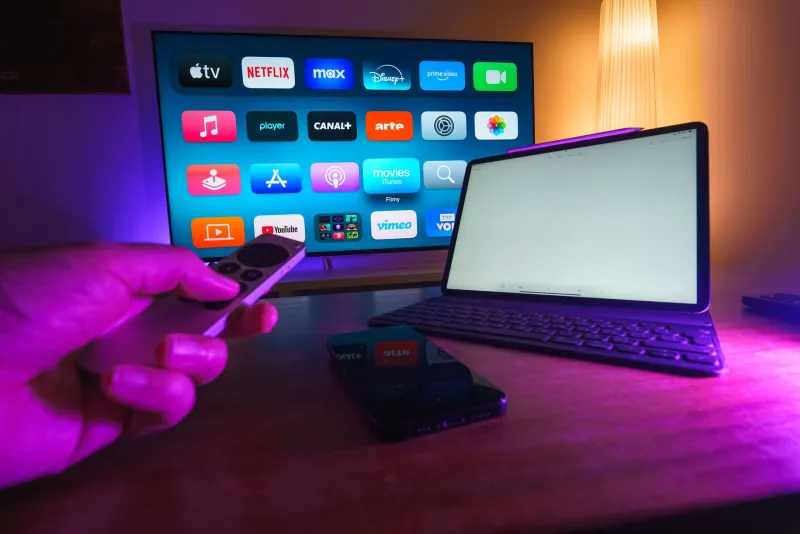
The UI itself is a funnel. Content the platform wants you to see sits at eye level. Everything else requires scrolling — and the further you scroll, the more the interface loads new suggestions, pulling you sideways rather than deeper into your actual search. On many platforms, the search bar is deliberately harder to find than the browse rows. Think about that.
Thumbnail Psychology: The Art of the Misleading Preview
Even the thumbnails you see aren't random. Platforms like Netflix famously A/B test thumbnail images, swapping out faces, color palettes, and framing based on what drives the most clicks from specific user profiles. A thriller might show a close-up of a character's frightened expression for one user and a moody landscape for another — all based on which version the algorithm predicts will get that particular person to click.
This isn't inherently sinister, but it does mean the image you see for a show might be specifically designed to appeal to your psychological profile, not to accurately represent the content. Viewers have reported clicking on titles expecting one genre and getting something entirely different — because the thumbnail was optimized for their click behavior, not for honest representation.
So What Can You Actually Do?
Reclaiming your streaming experience doesn't require deleting your accounts or going full analog. It just requires a little intentional friction — which, ironically, is the exact thing these platforms are designed to eliminate.
Make a list before you open the app. Sounds basic, but having a specific title in mind before you launch Netflix or Max dramatically reduces the chance of getting sidetracked by whatever's sitting in the hero banner.
Turn off auto-play. Yes, you have to find the setting. Yes, it's buried. Do it anyway. The few minutes it takes will pay off in dozens of intentional viewing decisions down the line.
Use search first, browse second. Going straight to the search bar bypasses most of the algorithmic nudging. You're telling the platform what you want instead of letting it tell you.
Rate things aggressively. Most platforms have some form of preference feedback — thumbs up, thumbs down, star ratings. Actually using these features is one of the few ways to genuinely influence what the algorithm learns about you.
Audit your subscriptions seasonally. If you're only using a platform to watch one show, consider pausing it between seasons. The content will still be there. Your wallet will thank you.
The Bigger Picture
None of this is unique to streaming. Social media feeds, news apps, and e-commerce platforms all use similar design logic — keep the user engaged, minimize exits, maximize time-on-platform. Streaming just feels more personal because it's positioned as leisure, as entertainment, as something you're doing for yourself.
But at ZynoFlix, we think you deserve a viewing experience that actually serves your intentions. Streaming bold means making real choices — not just defaulting to whatever the algorithm decided you probably won't bother turning off. The content is incredible right now. Don't let a cleverly designed interface keep you from actually enjoying it on your own terms.