Short, Sharp, Addictive: Why the 30-Minute Episode Is Taking Over Your Streaming Queue
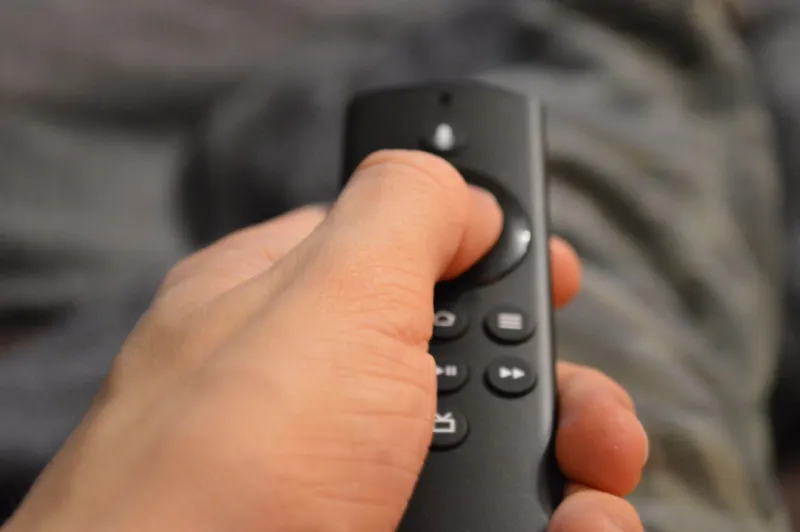
Picture this: It's 10:45 PM on a Tuesday. You've got work tomorrow. You tell yourself you'll watch one more episode — and then you check the runtime and see it's 28 minutes. Game over. You're watching four more.
If that scenario sounds familiar, you're not alone, and you're not just weak-willed. You're experiencing a very deliberate, very effective shift in how streaming content is being engineered — and it's reshaping the entire television industry in ways that are only starting to become clear.
The Hour-Long Drama Had Its Moment
For years, the 60-minute episode was the gold standard of prestige television. It signaled seriousness. It said: this story matters enough to demand your time. Cable dramas built entire identities around the format — slow burns, complex plots, cinematic scope. And for a certain era of TV, it worked beautifully.
But streaming changed the math. When every episode is available immediately, the pacing logic of traditional TV falls apart. Cliffhangers designed to bring you back next week don't need to work as hard when next week is literally the next 30 seconds. And when you're competing for attention against social media, short-form video, podcasts, and about a thousand other streaming services, the question of how much time you're asking someone to commit per episode becomes genuinely strategic.
The 30-minute episode isn't a compromise or a lesser format. It's an evolution — and the numbers are starting to prove it.
Why Shorter Episodes Actually Lead to Longer Viewing Sessions
This is the counterintuitive heart of the whole thing: shorter episodes make people watch more, not less.
Here's the psychology. When an episode ends at the 58-minute mark, starting another one feels like a major commitment. You're looking at nearly two hours of your night gone before you'd even be done with two episodes. Your brain does the math and sometimes says no.
But when an episode clocks in at 25 minutes? The mental calculus flips. One more episode is barely a cup of coffee's worth of time. The activation energy required to click "next" drops dramatically. And because streaming platforms are designed to reduce friction at every step — autoplay, seamless transitions, no ads interrupting your flow — that low activation energy compounds into three, four, five episodes before you've consciously decided to commit to a binge session.
Platform data across the industry consistently backs this up: series with shorter runtimes tend to see higher episode completion rates and longer overall session times. You watch more of a 25-minute show per sitting than you do a 55-minute one, even though each individual episode asks less of you.
The Short-Form Series That Are Absolutely Winning Right Now
Let's get specific, because the proof is in the content.
Comedy-Drama Hybrids have been leading this charge for years. The genre almost invented the modern short-form binge — half-hour episodes that blend genuine emotional weight with sharp humor, moving fast enough to keep you locked in but landing punches that linger. These shows figured out early that 30 minutes is actually more than enough time to make you feel something real if you're not wasting a second.
Limited Event Series in the 20-30 minute range have been breaking through in a big way. When a complete story arc unfolds across eight or ten short episodes, the commitment feels manageable upfront — and then you're three hours in before you realize the whole season is basically gone.
Docuseries and true crime content in the short-episode format have also seen massive engagement. A 25-minute true crime episode hits like a podcast with visuals — easy to start, nearly impossible to stop at just one.
At ZynoFlix, we're leaning into this shift hard. Our original series lineup includes short-form content built specifically for the way modern US audiences actually watch — which is to say, intensely and in volume. Stream bold, watch everything: that philosophy pairs perfectly with a format designed to keep you moving through stories without ever making the next chapter feel like a chore.
What This Means for Creators
The format shift is exciting for storytellers in ways that go beyond runtime. Shorter episodes demand tighter writing. Every scene has to earn its place. Subplots that would've been padded out across an hour-long format get compressed or cut entirely — which, honestly, often improves the final product.
Writers' rooms are having to retrain their instincts. The traditional TV structure of cold open, act breaks designed around commercial interruptions, and a final beat to close the hour simply doesn't apply. Short-form streaming episodes need a different kind of architecture — one that hooks immediately, moves without drag, and ends in a place that makes clicking "next" feel like the only logical option.
Directors are adapting too. Less time means tighter visual storytelling, less reliance on dialogue to carry exposition, and more trust in the audience to fill in gaps. In a lot of ways, the 30-minute streaming episode is pushing craft standards up, not down.
The Pushback — And Why It's Mostly Overblown
Not everyone's on board. There's a contingent of TV purists who see the shift toward shorter episodes as a symptom of shrinking attention spans, a capitulation to the TikTok-brained viewer who can't sit still for a proper drama. That critique deserves a fair hearing — and then a gentle pushback.
Attention spans aren't necessarily shrinking; they're becoming more selective. Modern viewers will absolutely commit to long-form content when it justifies the investment. The problem isn't that people can't watch for 60 minutes — it's that a lot of 60-minute episodes contain about 35 minutes of actual story and 25 minutes of wheel-spinning. Short-form formats eliminate the temptation to pad.
The best long-form series still work because they earn their runtime. But the average hour-long episode on a streaming platform? It often doesn't. And audiences have gotten very good at sensing that.
The Next Five Years: What the Format Landscape Looks Like
Industry projections are pointing in a clear direction. Here's what we expect to see:
- More hybrid runtime flexibility. Platforms will increasingly let episode lengths vary within a single series based on story needs rather than format convention — some episodes 20 minutes, some 45, driven by narrative rather than schedule.
- Short-form originals as tentpole content. What used to be considered a secondary format will become flagship programming for major platforms. The prestige short-form series is already arriving; in five years it'll be the norm.
- Creator tools evolving around the format. Production pipelines, budgeting models, and writers' room structures will adapt to short-form as a primary mode rather than a secondary one.
- International short-form content going global. South Korean and Japanese short-form series have already demonstrated massive crossover appeal. Expect US platforms to invest heavily in international short-form originals as a growth strategy.
The 30-minute episode isn't a trend that's peaking — it's a format that's maturing into the backbone of streaming entertainment. And if your Tuesday night binge sessions are any indication, your viewing habits are already ahead of the curve.
Your queue isn't going to watch itself. Might as well start the next episode — it's only 27 minutes.