Five Subscriptions, One Mortgage Payment: The Hidden Cost of Streaming's Turf War
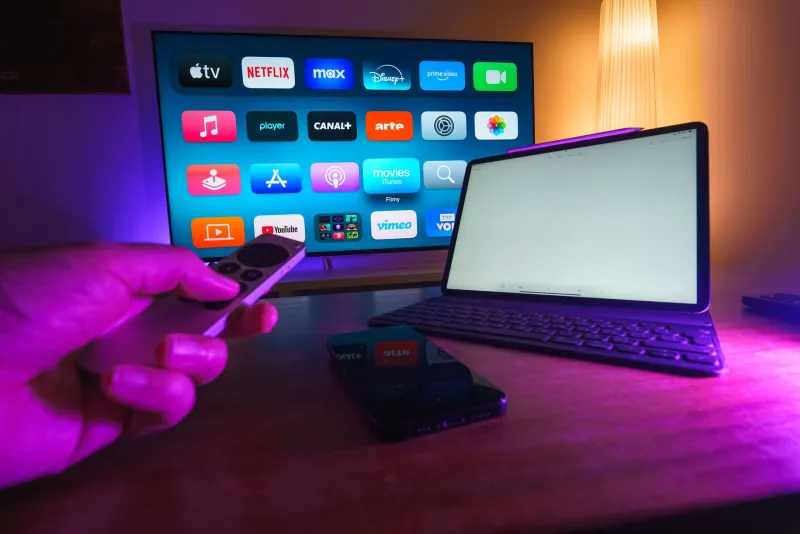
Remember the pitch? Ditch the cable company, pay fifteen bucks a month, watch whatever you want. It was clean. It was simple. It made sense. That version of streaming — the lean, liberating, one-subscription dream — is essentially a museum piece now. What replaced it is a fragmented, expensive, increasingly exhausting ecosystem that, if you're being honest with yourself, costs more than the cable bundle you were so happy to cancel.
Welcome to the real streaming era, where the war between platforms is being fought with your wallet as the battlefield.
What You're Actually Paying Every Month
Let's do the math that the press releases don't do for you. A fully loaded household trying to keep up with prestige TV in 2024 probably has Netflix (around $22.99/month for ad-free), Max ($15.99), Hulu ($17.99 without ads), Disney+ ($13.99), Peacock ($13.99), and Paramount+ ($11.99). Toss in Apple TV+ at $9.99 if you want Ted Lasso reruns and whatever they drop next, and you're staring at roughly $106 a month before taxes, fees, or the annual price hike that's basically guaranteed.
For context, the average American cable bill hovered around $83 a month back when cord-cutting was reaching its peak in the late 2010s. The math is not flattering for streaming's origin story.
And unlike cable — where you complained about paying for 400 channels you never watched but at least had everything in one place — streaming fractures the experience entirely. You're not just paying more. You're paying more and logging in and out of five different apps to find the thing you want to watch.
Exclusivity Is the Engine Driving All of This
The reason your bill looks like this isn't accidental. It's architectural. Every major platform has built its entire identity around content you literally cannot watch anywhere else. HBO's prestige catalog lives only on Max. The entire Marvel and Star Wars universe is Disney+ territory. "Yellowstone" and its extended universe are Paramount+ anchors. "The Bear," "Only Murders in the Building" — Hulu. "Reacher," "The Boys," "Fallout" — Prime Video, which, yes, is technically bundled with Amazon Prime but now also runs ads unless you pay extra.
This exclusivity model is intentional and ruthless. Studios and tech companies alike figured out that the only way to guarantee subscriptions is to hold content hostage. If you want to watch it, you pay. There is no other option. And because every platform is racing to build its own unmissable library, the total number of "must-have" subscriptions keeps climbing.
The result is a system that has, ironically, rebuilt the bundle — just without any of the efficiency.
Is This Model Actually Sustainable?
Short answer: probably not in its current form. The longer answer requires looking at what's already starting to crack.
Streaming subscriber growth has plateaued across most major platforms. Netflix, after years of explosive expansion, shocked the market when it reported subscriber losses in 2022 — a moment that sent shockwaves through the entire industry and triggered the password-sharing crackdowns we're all living with now. Disney+ has had its own turbulent quarters. The easy growth phase, fueled by pandemic-era couch time and first-time adopters, is over.
Meanwhile, content spending remains astronomical. Netflix alone spent over $17 billion on content in 2023. That's not a typo. Platforms are burning through cash to build exclusive libraries while simultaneously trying to turn a profit — a tension that's becoming increasingly difficult to manage as subscriber acquisition costs rise and churn rates stay stubbornly high.
Churn is the industry's dirty little secret. A significant chunk of subscribers sign up, binge one show, and cancel. Platforms know this. They've built entire content strategies around it, dropping full seasons at once (Netflix) or spreading episodes weekly (Max, Hulu) to manipulate how long you stay subscribed. Neither approach is built around your experience. Both are built around their revenue.
The Bundle Is Coming Back — Just Rebranded
Here's the irony that no one in Silicon Valley seems eager to advertise: the mega-bundle is already making its comeback. Disney's bundle of Disney+, Hulu, and ESPN+ is the clearest example — a company essentially rebuilding a mini-cable package under its own roof. Apple One bundles Apple TV+ with music, storage, and fitness services. Amazon Prime wraps video into a broader retail relationship.
The next logical step, which analysts have been predicting for a couple of years now, is cross-company bundling. Deals between competing platforms that let consumers pay one price for access to multiple services. There have already been exploratory conversations, and a few limited partnership deals have quietly emerged. It's not hard to imagine a world where three or four mega-conglomerates each offer a super-bundle, and the streaming landscape consolidates into something resembling — you guessed it — cable, but with better UI.
The question isn't really if consolidation happens. It's how painful the path there will be for consumers stuck subscribing to everything in the meantime.
What You Can Actually Do Right Now
While the industry figures itself out, there are a few survival strategies worth considering. Rotating subscriptions — subscribing to one or two platforms, binging what you want, canceling, and rotating to another — has become a legitimate viewing strategy for cost-conscious households. It's more work, but it works.
Keeping an eye on bundle deals is also worth your time. The Disney/Hulu/ESPN bundle frequently runs promotional pricing that undercuts individual subscription costs significantly. Carriers like Verizon and T-Mobile have been known to include streaming subscriptions in their phone plans, sometimes at no additional charge.
And honestly? Accepting that you don't need every platform simultaneously is a form of financial self-defense. FOMO is exactly what these companies are monetizing. The show will still be there in three months when you rotate back.
Streaming was supposed to be the disruption that saved us from the cable industry's worst habits — the bundled bloat, the price hikes, the lack of choice. Instead, it replicated all of them, distributed across a dozen corporate silos. The streaming wars are very much still raging, and until the dust settles into some new consolidated normal, the most honest thing we can say is this: the consumer isn't winning. Not yet.