The Vanishing Friday Night Movie: Whatever Happened to the Just-Fine Film?
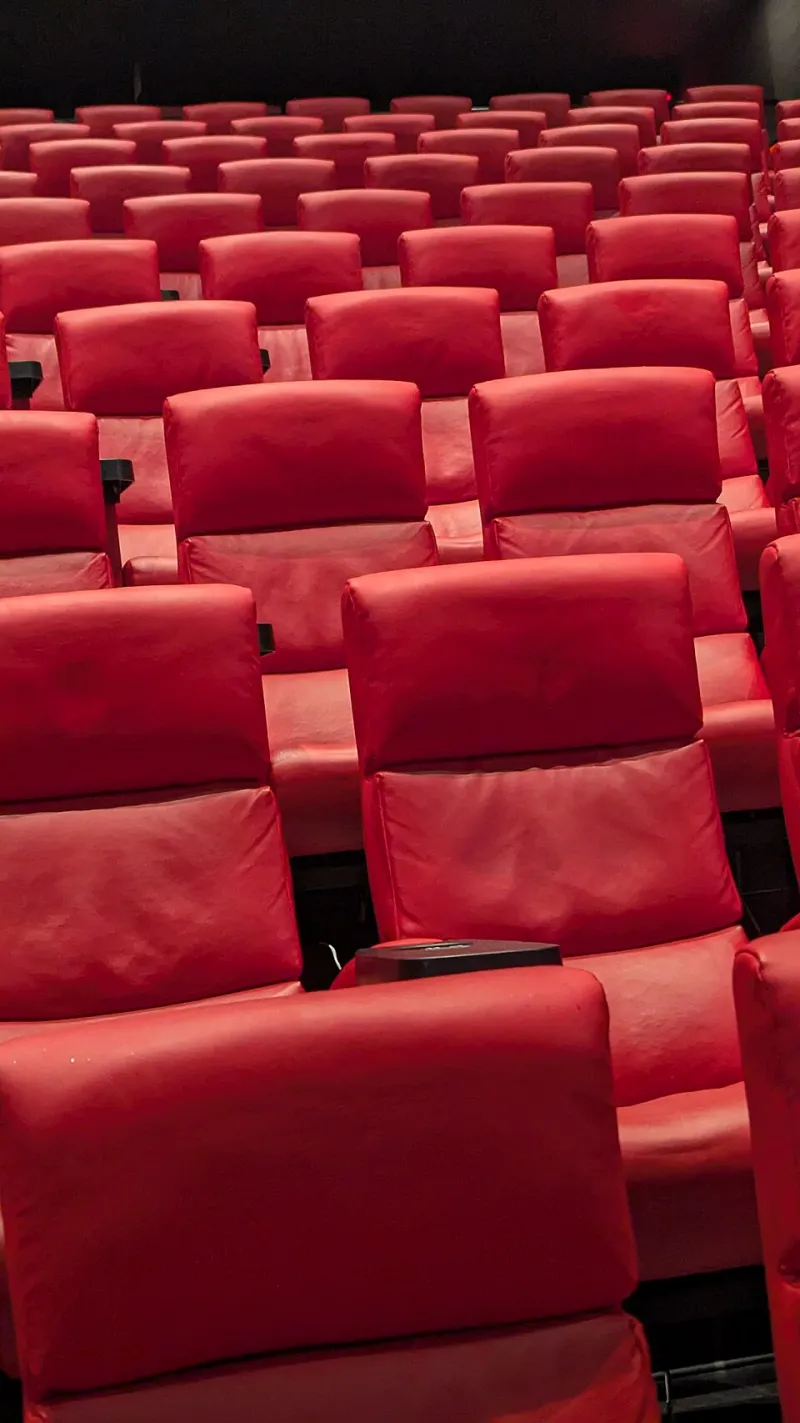
Photo: Eden, Janine and Jim from New York City, CC BY 2.0, via Wikimedia Commons
There is a specific kind of movie that used to fill the space between blockbusters and art houses. It was not trying to launch a universe. It was not chasing an Oscar. It was a mid-budget adult drama, a comedy with a couple of stars, a standalone thriller with a clever hook and a clean ending. You might not remember the title a year later, but you remembered the night you watched it. It was a Friday-night movie. It was normal.
That movie is harder to find now. Not impossible—just harder. The middle of the market has been squeezed, and the squeeze has changed what streaming feels like. The library is enormous. The options are endless. And yet, when you scroll through the rows, something is missing.
The Movie That Wasn’t Trying to Be a Universe
The normal movie did not need a pre-sale. It did not need a post-credits scene. It did not need a fan campaign to justify a sequel. It needed a script, a few actors who could carry a scene, and a budget that did not require global dominance to break even. It could be a legal thriller, a workplace comedy, a family drama, a road movie, a romantic comedy with a smart edge. It could be forgettable in the best way.
The economics of that model have largely collapsed. Theatrical releases now favor event movies because event movies are the ones that can survive the trip. A $30 million drama has a hard time competing for screens against a $200 million franchise installment. The marketing spend alone can dwarf the production budget. The risk is too high, the upside too limited. So the middle gets skipped.
Why the Middle Got Squeezed
Franchise economics are one reason. Streaming’s hit-driven model is another. Platforms do not just want viewers. They want engagement, completion, conversation, and subscriber retention. A solid standalone movie can deliver all of those things, but it is harder to market than a known property. It does not come with built-in awareness. It does not generate a thousand explainer videos. It does not have a built-in sequel hook.
So the money moves toward the extremes. On one end, you get the massive franchise tentpole. On the other, you get the micro-budget indie that costs almost nothing and can be sold as a discovery. The middle is where the risk sits: too expensive to be cheap, too small to be an event. That is a bad place to be in a business that rewards scale.
Television absorbed some of that energy. Limited series became the new home for the adult drama, the true-crime thriller, the literary adaptation. A story that might have been a 110-minute movie became a six-episode event. Sometimes that works. Sometimes it stretches a good idea into a thin one. But it did take the place of the standalone film for a lot of viewers.
Where the Normal Movie Went
Some of it migrated to streaming originals. Some of it went to indie distributors. Some of it went to international productions that found US audiences through subtitles and algorithms. Some of it simply stopped getting made. The result is a library that looks diverse on the surface but often feels narrow in practice. There are more titles than ever, but fewer of them are aiming for the same sweet spot: a self-contained story for adults who want something engaging without committing to a ten-hour mythology.
The normal movie also lost its cultural slot. It used to be the thing you rented, the thing you saw on a plane, the thing that played on cable on a Sunday afternoon. Those windows have narrowed. Streaming should have been a natural home for it, but the platform model rewards shows that keep you subscribed and movies that generate immediate buzz. A quiet, well-made drama does neither loudly enough.
A Library That Feels Empty Anyway
This is the strange part. You can open a streaming service and see thousands of titles. You can search by genre, mood, actor, decade. And still feel like there is nothing to watch. That feeling is not just indecision. It is the absence of the middle. The extremes are easy to spot: the giant franchise, the tiny indie, the prestige limited series. The normal movie is the one that used to sit between them, and it is the one that made the library feel livable.
A healthy film culture needs all three. It needs the spectacle. It needs the experiment. And it needs the solid, mid-budget story that does not pretend to be more than it is. That movie gave actors room to work, directors room to fail, and audiences room to show up for something that was not already a brand.
The Case for Bringing It Back
There are signs of life. Some streamers have started to notice that subscribers want finished stories, not just endless setup. International films are filling some of the gap. Independent distributors are finding audiences through virtual cinemas and word-of-mouth. But the normal movie will not come back just because people miss it. It needs a business model that does not treat the middle as a rounding error.
That could mean smaller budgets, faster schedules, and marketing that trusts the premise instead of the franchise. It could mean platforms treating a good standalone film as a retention tool, not a loss leader. It could mean audiences actually clicking on the movie that does not have a built-in fan base.
The normal movie was never glamorous. That was the point. It was the reliable option, the easy yes, the thing you watched because it was there and it looked good enough. Streaming could use more of that. Not everything needs to be an event. Sometimes you just want a movie.