Paying for Ghosts: The Psychology Behind Streaming Services You Never Actually Open
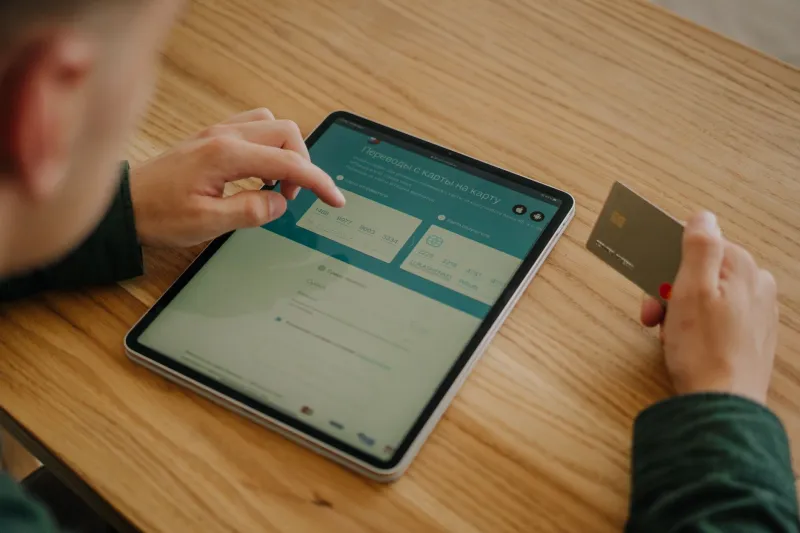
Check your bank statement. Go ahead, actually look at it. Somewhere in that scrolling list of charges, there's a good chance you'll find a streaming service — maybe two or three — that you haven't opened since sometime around the last major holiday. You meant to cancel. You thought about canceling. You might have even hovered over the cancel button once before something else grabbed your attention and pulled you away.
That moment of almost-canceling? It wasn't an accident.
The Subscription You Forgot You Were Paying For
American households are currently averaging somewhere between four and six streaming subscriptions at any given time. That number sounds manageable until you start doing the math and realize that a chunk of those subscriptions are essentially phantom expenses — services running quietly in the background like an app you forgot to close.
Research from consumer analytics firms has found that a significant portion of subscribers go 90 days or longer without logging into services they're still actively paying for. And yet the charges keep clearing. Month after month, the money moves, and the service just... sits there. Waiting.
This isn't a niche problem. It's practically a national hobby.
Sunk Cost, Meet Your Streaming Bill
Here's where the brain starts working against you. The sunk cost fallacy — the deeply human tendency to keep investing in something because of what you've already put into it — hits streaming subscriptions hard. You've been paying for a service for eight months. Canceling now feels like admitting those eight months were wasted. So you keep the subscription alive as a kind of psychological IOU to your future self, the version of you who will definitely get around to watching that prestige drama everyone was talking about in February.
Future you, statistically speaking, is not going to watch it.
But present you isn't ready to accept that yet. And the platforms are counting on it.
FOMO as a Business Model
Streaming services have quietly turned fear of missing out into a retention strategy. Every few weeks, a new limited series drops. A buzzy documentary gets a big press cycle. A reunion special trends on social media for 48 hours. None of this is coincidental — it's a content release cadence specifically designed to make canceling feel like a bad idea right now.
The implicit message is always the same: something good is coming. Stick around. You won't want to miss it.
This is especially effective in the US, where cultural conversation moves fast and being out of the loop carries a genuine social cost. Missing a show that your coworkers, friends, or family are all discussing isn't just inconvenient — it can feel like being excluded from a shared experience. Platforms understand this dynamic intimately, and they schedule their content drops accordingly.
The Obstacle Course Called Cancellation
Even when subscribers finally decide they're done, platforms don't exactly roll out the red carpet for the exit. Cancellation flows are a masterclass in friction design. You'll navigate through multiple confirmation screens. You'll be offered a discounted rate to stay. You'll be reminded of everything you'd be giving up. Some services bury the cancel option so deep in account settings that finding it feels like a side quest in a video game you never asked to play.
This isn't user experience design failing — it's user experience design succeeding at exactly what it was built to do. The harder it is to leave, the more people simply give up on leaving. They close the browser tab, tell themselves they'll deal with it later, and another month slips by.
Compare this to the signup process, which typically takes about 90 seconds and requires almost no effort at all. The asymmetry is intentional and dramatic.
The Pause Button That Isn't Really a Pause
Some platforms offer a "pause" feature as an alternative to full cancellation — a way to temporarily suspend your account without losing your watch history or preferences. It sounds considerate. In practice, it's another retention mechanism. Pausing keeps you tethered. It keeps your profile alive, your recommendations warm, and your eventual return frictionless. Platforms know that a paused account is far more likely to reactivate than a fully canceled one.
The pause feature is less of a courtesy and more of a soft catch net, positioned right before the exit door.
Willpower in the Age of Auto-Renewal
There's something worth sitting with here: breaking free from a streaming service you never use genuinely requires a specific kind of willpower. Not the dramatic, cinematic kind — but the quiet, administrative kind. The kind that involves logging into an account you haven't touched, navigating a deliberately confusing menu, and clicking through screens designed to make you second-guess yourself.
For a lot of people, that friction is enough. Life is busy. The charge is small enough to feel manageable. And somewhere in the back of your mind, there's still that prestige drama you were going to get to eventually.
Platforms have essentially gambled — correctly, in most cases — that the path of least resistance is the one subscribers will take. And the path of least resistance is always the one that keeps the subscription alive.
How to Actually Break the Cycle
If you're serious about auditing your streaming situation, the most effective approach is brutally simple: treat your subscriptions like gym memberships. If you haven't used it in 60 days, it's probably not serving you. Set a calendar reminder for the day before your next billing cycle and actually follow through.
Some financial apps now flag recurring subscriptions automatically, which takes the memory work out of the equation. A few banking platforms will even notify you when a free trial is about to convert to a paid subscription — which is exactly the kind of transparency that streaming services themselves have no interest in offering.
The other move? Rotate deliberately. Subscribe to one service, burn through what you want to watch, then cancel and move on. It takes more effort upfront, but it's the closest thing to actually being in control of your own streaming life.
The Bigger Picture
There's a reason platforms spend enormous resources on subscriber retention in addition to subscriber acquisition. Keeping an existing customer costs a fraction of what it takes to find a new one. And keeping a customer who isn't even actively watching? That's pure margin.
Your dormant subscription isn't a mistake on anyone's part except, arguably, the platform's designers — who built a system specifically calibrated to make sure you never quite get around to canceling. The good news is that once you see the mechanism clearly, it loses a little of its power.
You're not forgetful. You're not lazy. You're just navigating a system that was engineered to outlast your intentions.
Now go check that bank statement.