One More Episode: The Invisible Machine Designed to Eat Your Evening
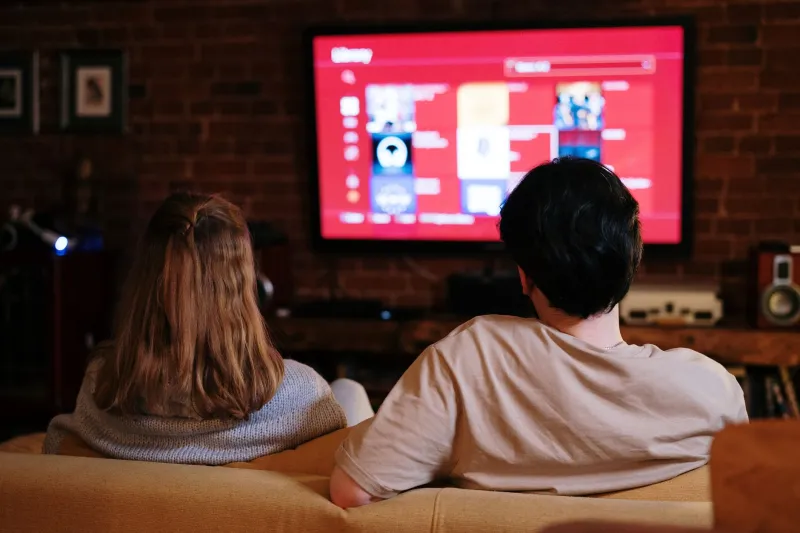
It starts innocently enough. You sit down with maybe forty-five minutes to spare before you need to be a functional adult again. One episode. Just to decompress. Just to take the edge off a day that had too many edges.
Three hours later, you're still there. The room is darker than you remember. You're not even sure you're enjoying what's on the screen anymore. But somehow, you're still watching.
Welcome to the binge trap. And unlike most traps, this one was engineered by people with PhDs, A/B test data, and a very clear understanding of how the human brain resists stopping.
The Autoplay Didn't Happen by Accident
Let's start with the most obvious mechanism, because its obviousness makes it easy to underestimate. Autoplay — that countdown timer that ticks from ten to zero and rolls you directly into the next episode before you've had a moment to reconsider — is not a convenience feature. It's a conversion tool.
Former UX designers who've worked at major streaming services have been increasingly candid about this in recent years. The default is always "keep watching." Opting out requires active effort. And the research behind that design is unambiguous: when the next episode starts automatically, completion rates go up dramatically compared to services that require users to manually press play.
That ten-second window isn't generous — it's calculated. It's short enough that most people won't move, but long enough that the platform can claim it gave you a choice. You technically had the option to stop. You just didn't take it. That distinction matters enormously to the people who designed the system and not at all to your sleep schedule.
Cliffhangers Are a Technology Now
The art of the cliffhanger has existed since serialized fiction was published in 19th-century newspapers. But streaming platforms have turned it into something closer to a science.
Data teams at major services can tell, with remarkable precision, exactly which moment in an episode creates the strongest pull toward the next one. They know the difference between a cliffhanger that makes you curious and one that makes you feel like you physically cannot stop. They know that unresolved emotional tension is more effective than unresolved plot tension. They know that ending on a character's face — held just a beat too long — outperforms a dramatic action sequence when it comes to driving immediate next-episode starts.
And they share this information with showrunners. Not always explicitly. Sometimes it comes through in notes, in the rhythm of notes meetings, in which episode structures get greenlit and which ones get sent back for revisions. The creative process and the engagement optimization process have become deeply intertwined, and the seam between them is nearly invisible from the outside.
Your Brain on the Queue
Neuroscience has a lot to say about why binge-watching is so hard to stop once it starts, and streaming platforms have been paying close attention.
Every time something surprising or emotionally resonant happens on screen — a plot twist, a romantic moment, a sudden act of violence — your brain releases a small hit of dopamine. It's the same basic mechanism involved in scrolling social media, playing slot machines, or opening a mystery box. The reward is unpredictable, which makes the anticipation of it more powerful than a guaranteed outcome would be.
Streaming content, particularly prestige drama and thriller series, is structured to deliver these moments at intervals calibrated to keep the dopamine loop running. Just when the tension of one storyline resolves, another opens. Just when you feel satisfied, a new question appears. The brain, chasing the next hit, interprets "one more episode" as a completely reasonable decision.
Researchers who study media consumption have noted that the subjective experience of binge-watching often diverges sharply from the reported enjoyment afterward. People describe sessions as compulsive rather than pleasurable. They use words like "couldn't stop" and "lost track of time" — language that sounds less like leisure and more like something else.
The Algorithm Isn't Your Friend
Beyond the episode-level design, there's the broader recommendation engine — the system that decides what you should watch next when you finish a series, or what thumbnail catches your eye when you open the app.
These systems are not optimized for your satisfaction. They are optimized for your engagement. Those two things are not the same, and the distinction is important.
A recommendation engine optimized for satisfaction would learn that you feel better after watching a tight two-hour film than after a six-hour binge of something you only half-liked. It would learn that you regret certain choices and try to steer you toward the ones you don't. It would, essentially, act like a good friend with excellent taste.
What these engines actually do is learn what keeps you on the platform longest and serve you more of it. The metric is watch time, not wellbeing. And because the two sometimes align — you do often enjoy what you watch for a long time — the system appears to be working in your interest. Until you look up and realize it's 2 a.m. on a work night.
Are We Addicts or Just Customers?
The question of whether streaming platforms are exploiting something like addiction is one that researchers and ethicists have been wrestling with for a while now, and it doesn't have a clean answer.
On one hand, nobody is being forced to watch. The off button exists. Parental controls, screen time limits, and even built-in "are you still watching?" prompts have all been introduced as gestures toward user agency. On the other hand, these features are all opt-in, buried in settings menus, and surrounded by a default environment that is aggressively designed to do the opposite of what they do.
The honest answer is probably somewhere in the middle: streaming platforms are not creating addiction in the clinical sense, but they are deliberately engineering conditions that make self-regulation harder than it needs to be. Whether that's predatory or just good product design depends a lot on where you think a company's responsibility to its users ends.
Taking Your Evening Back
None of this means you have to delete your apps and read books by candlelight. But knowing the system exists is genuinely useful.
Turning off autoplay is a real intervention — it forces the conscious decision that the platform is designed to skip. Watching with someone else changes the dynamic in ways that make stopping more natural. Choosing films over series when you have limited time removes the episodic hook entirely.
And maybe most importantly: noticing the moment when you've stopped enjoying something but kept watching anyway is worth something. That moment — that specific feeling of watching out of momentum rather than interest — is exactly what the machine is built to create.
You're not weak for falling into it. You're just up against something that was engineered to be very, very hard to climb out of.