Cable's Comeback: Why Young Viewers Are Rediscovering the Joy of Appointment Television
Nobody predicted this. Not the analysts, not the network executives who spent a decade frantically pivoting to streaming, and definitely not the cord-cutting evangelists who declared linear television dead sometime around 2016. But here we are, watching Gen Z — the generation practically born with a streaming remote in its hand — quietly drift back toward cable bundles and live broadcast television.
It's not a mass migration. It's not going to save the cable industry as it existed in 2010. But it's real, it's measurable, and it's revealing something important about what the streaming revolution got wrong.
The Fragmentation Problem Nobody Warned You About
The pitch for streaming always emphasized freedom. Watch what you want, when you want, on whatever device you want. No more being held hostage to a network schedule. No more flipping through 200 channels looking for something decent. Pure, personalized, on-demand television utopia.
What that pitch underestimated was how exhausting freedom can be.
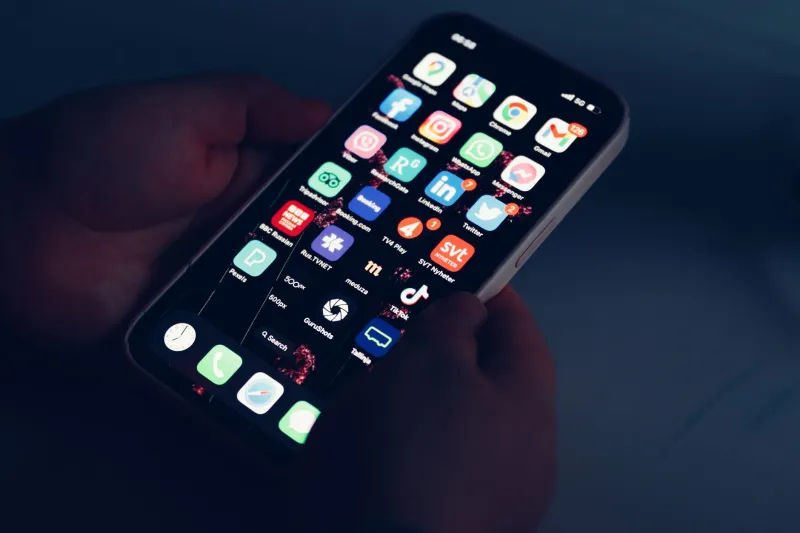
Right now, a fully loaded streaming household might be juggling subscriptions to five or six different services, each with its own app, its own login, its own interface, and its own library that doesn't talk to any of the others. Finding something to watch requires navigating between platforms, remembering what's where, and doing a mental inventory of what you've already seen. It's not watching TV. It's managing a portfolio.
Cable, for all its genuine flaws, solved a logistics problem that streaming has since recreated in a more expensive and more annoying form. You turned it on. There was stuff on. You watched the stuff.
Live Sports Changed Everything
If there's a single inflection point in this story, it's live sports. Streaming services spent years acquiring sports rights — a little baseball here, some soccer there, a few NFL games — but the experience of watching live sports through an app has consistently been worse than watching it on cable or broadcast TV.
Buffering during a fourth-quarter drive. Blackout restrictions that vary by zip code and defy logical explanation. Broadcast delays that mean your Twitter feed spoils the score before the stream catches up. For sports fans, these aren't minor inconveniences. They're deal-breakers.
And Gen Z, despite being stereotyped as a generation that doesn't care about sports, has shown up in significant numbers for live events. NFL viewership among 18-to-34-year-olds has actually grown in recent years. College football is a cultural institution across huge swaths of the country. The NBA's social media presence is enormous, and a lot of that engagement is driven by younger fans who actually want to watch the games — not just the highlight clips.
For those viewers, cable isn't a relic. It's the most reliable way to watch the thing they actually want to watch.
The Community Problem
Here's something streaming genuinely didn't anticipate: watching the same thing at the same time as other people turns out to be kind of great.
The whole premise of on-demand viewing was that the schedule was the enemy. But the schedule also created a shared cultural moment. When a big episode of a network drama aired on a Tuesday night in 2005, everyone who watched it watched it together. You could talk about it the next morning at work. The conversation and the viewing experience were linked.
Streaming broke that link. Full-season drops mean that one person binge-watches the whole thing in a weekend while another watches one episode a week. There's no shared moment, no synchronized collective experience. The conversation is permanently spoiler-mined.
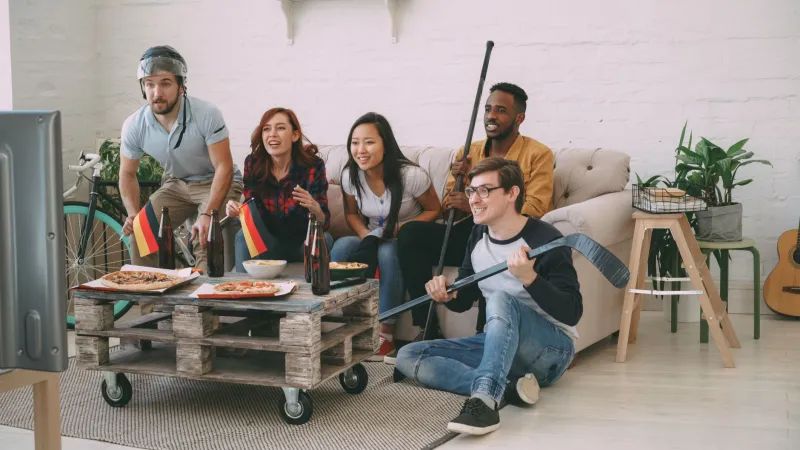
Live television — especially live events like awards shows, major sports, or even just a buzzy season finale airing in real time — reconstructs that communal experience. The Super Bowl is the most watched television event every year not because the game is always great but because everyone is watching it at the same time. That simultaneity is the product.
Gen Z, which has grown up with parasocial communities and real-time social media reactions, understands this intuitively. They want to be part of something live. They want to react in the moment. Cable and broadcast TV still do that better than any streaming service.
The Price Arithmetic Got Real
Let's also be honest about the money. The streaming era was supposed to be cheaper than cable. For a while, it was. But the era of $8-a-month Netflix and nothing else is long gone. Add up a realistic bundle of streaming services in 2025 — with the ad-free tiers, because who actually watches ads voluntarily — and you're looking at a monthly bill that rivals or exceeds what a cable package used to cost.
At that price point, cable bundles that include live sports, local news, and a full channel lineup start looking like a reasonable deal again. Some providers have gotten creative with packaging, offering slimmed-down bundles that combine a few streaming services with a live TV component. That's not your grandfather's cable package. But it's also not a clean break from the linear model.
For younger viewers who are newly paying their own bills and actually doing the math on their entertainment spending, the calculus has shifted.
What Streaming Got Wrong
None of this means streaming is going away. It's not. But the narrative that streaming would completely replace linear television has not aged well. What's emerging instead looks more like coexistence — a media landscape where streaming handles on-demand viewing and original content while cable and broadcast hold onto live events, sports, and the kind of appointment television that requires a shared schedule.
The irony is that streaming's biggest cultural wins — the shows that genuinely broke through and became shared cultural touchstones — often happened when people watched them on something close to a schedule anyway. The weekly episode drop, the appointment viewing mentality, the live-tweet-along: these are cable behaviors that streaming audiences adopted on their own, because the underlying human desire for shared experience didn't disappear just because the technology changed.
Gen Z didn't go back to cable because they're nostalgic. Most of them barely remember a world where cable was the only option. They went back because cable, in certain specific and important ways, still does some things better. That's not a eulogy for streaming. It's just the truth.